Restore Microphone Access Using Built-In Settings
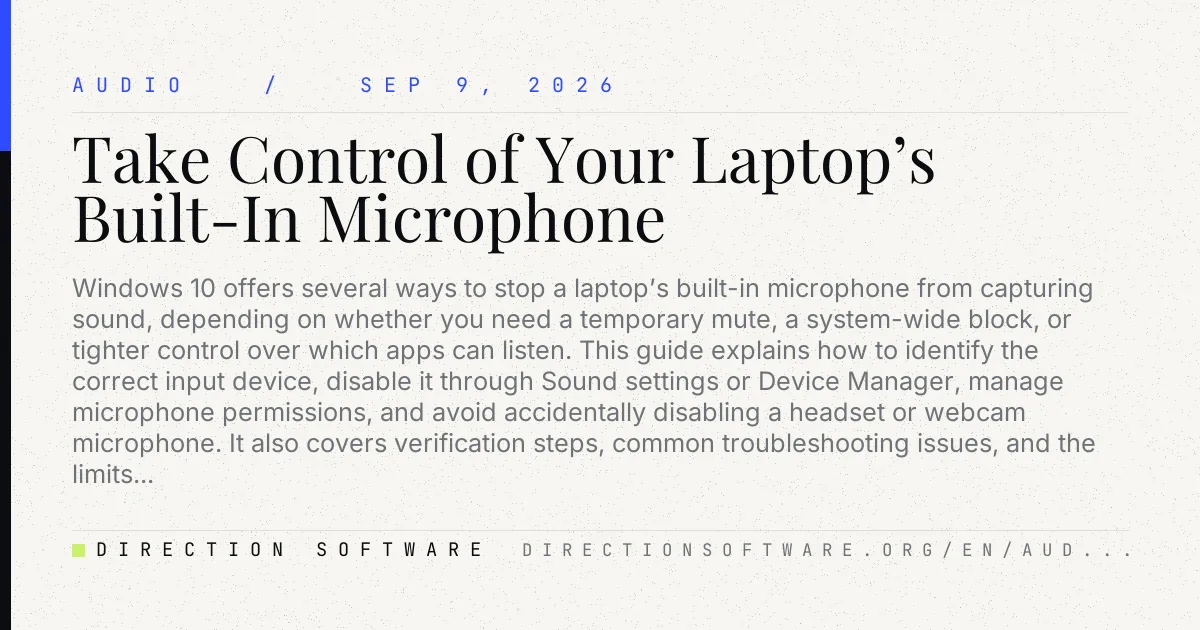
A microphone can appear blocked for several reasons, including a physical mute switch, incorrect input selection, operating-system privacy controls, browser permissions, or an app-level setting. This guide explains how to identify the source of the problem and restore access using only built-in Windows, macOS, Android, iPhone, and web browser controls. It covers safe checks for hardware and connections, permission settings for individual apps and websites, input-level testing, and practical steps for avoiding unnecessary driver downloads. It also explains when a problem is likely caused by hardware damage rather than a software block, helping users decide whether professional repair or device support is needed.
A blocked microphone is often a permissions or settings problem rather than a hardware failure. Before downloading drivers, “repair” utilities, or third-party audio tools, check the controls already built into your device and browser. A physical mute button, an incorrect input device, a privacy restriction, or a denied website permission can all prevent audio from being captured. The steps below help you isolate the cause and restore microphone access without installing anything.
Start With the Simple Hardware Checks
First, make sure the microphone is not muted or disconnected. This matters for built-in laptop microphones, USB headsets, wired earbuds, webcams, and external microphones alike. Software cannot override a physical mute switch on many devices.
- Check for a microphone mute key on a laptop keyboard, often marked with a microphone icon.
- Inspect headset in-line controls for a mute slider or button.
- Reconnect a USB microphone or headset directly to another USB port.
- For a 3.5 mm headset, ensure the plug is fully inserted into the correct combined headset jack.
- Remove cases or debris that may cover a phone or tablet microphone opening.
- Disconnect Bluetooth audio devices temporarily; a connected headset may be selected as the active input.
If you use an external device, unplug it and test the built-in microphone. If the internal microphone works, the issue is usually with the external device, cable, adapter, port, or its selected input—not a system-wide microphone block.
Identify Where the Block Occurs
Think about where the microphone fails. If it does not work in any application, focus on hardware, operating-system privacy settings, and the selected input device. If it works in one app but not another, check that specific app’s permissions. If it works in installed apps but fails in a video meeting website, review browser and site permissions.
| Symptom | Most likely cause | Built-in check |
|---|---|---|
| No app can detect sound | Muted device, wrong input, or system privacy setting | Check hardware controls, input selection, and OS microphone access |
| Only one app cannot use the microphone | App permission denied or app input set incorrectly | Enable the app under Privacy settings and choose the correct microphone |
| A website cannot hear you | Browser or site permission blocked | Allow microphone access in the address-bar site controls |
| Sound level is very low | Input volume, gain, distance, or obstruction | Raise input level and test close to the microphone |
| External headset is missing | Connection, Bluetooth routing, or adapter issue | Reconnect it, select it as input, and test another port or cable |
Enable Microphone Access in Windows
On Windows 11, open Start > Settings > Privacy & security > Microphone. Turn on Microphone access. Then enable Let apps access your microphone and, if needed, allow the specific application in the list below.
Next, open Settings > System > Sound. Under Input, select the microphone you want to use. Speak normally and watch the input level indicator. If it moves, Windows is receiving audio. Select the device to review its input volume and ensure it is not muted.
Check desktop app access
Some traditional desktop applications are controlled by the separate Let desktop apps access your microphone setting. Enable it if a desktop calling, recording, or conferencing app cannot hear you even though Windows detects sound.
Do not assume that a missing microphone requires a driver download. Windows often restores normal operation after the correct input is selected and privacy access is enabled. Downloading unknown “driver updater” tools can create security and stability problems.
Restore Access on a Mac
On macOS, choose Apple menu > System Settings > Privacy & Security > Microphone. Enable the switch beside the app that needs access. If the app is not listed, open it and attempt to use its microphone feature; macOS should request permission.
Then go to System Settings > Sound > Input. Select the intended microphone and speak while watching the input level meter. Raise Input volume if necessary. For an external device, verify that it appears in the list and is selected rather than the internal microphone.
Consider Screen Time restrictions
On managed family or school devices, microphone use may be limited through Screen Time or device-management policies. A work or school administrator may need to change that policy. Avoid trying to bypass organizational restrictions; ask the administrator to confirm the approved configuration.
Allow the Microphone in Your Browser
Websites such as meeting platforms, voice recorders, and customer-support portals need permission from both the browser and the individual site. A denied prompt can remain stored until you change it.
- Open the website where the microphone is blocked.
- Select the site controls icon near the address bar, commonly shown as sliders, a lock, or a settings symbol.
- Find Microphone and change the permission to Allow.
- Reload the page when prompted.
- In the site’s audio settings, choose the microphone that matches your headset, webcam, or built-in device.
- Speak during the site’s test and confirm that its input meter responds.
In Chrome, Edge, and other Chromium-based browsers, you can also review global controls in browser Settings under Privacy and security or Site settings. In Firefox, use Settings and search for permissions, then review microphone entries. In Safari on a Mac, use Safari > Settings > Websites > Microphone to set permissions for individual sites.
If the browser is using the wrong device, disconnect unused Bluetooth headsets and reload the page after selecting the preferred system input. Many web apps read the available devices only when the page opens.
Check Mobile Device Permissions
On an iPhone, open Settings > Privacy & Security > Microphone and enable the app that needs access. You can also open Settings > [App Name] and turn on Microphone where available. Check that Screen Time restrictions are not preventing changes.
On Android, menu names differ slightly by manufacturer, but the usual route is Settings > Privacy > Permission manager > Microphone. Select the app and choose Allow only while using the app or another appropriate option. Newer Android versions may also have a system-wide microphone toggle in Quick Settings; make sure it is enabled.
For mobile browsers, permit microphone use when the browser asks, then confirm the website permission in the browser’s site settings. Close and reopen the browser tab after making changes.
Test, Reset, and Know When It Is Hardware
Use a built-in test before changing anything else. Windows provides an input meter in Sound settings, while macOS shows an input level meter in Sound settings. Phones can be tested by recording a brief voice memo with the built-in recorder. A visible meter response means the operating system can hear the microphone; remaining trouble is likely limited to an app or browser.
If the meter does not move, restart the device after checking permissions and input selection. Restarting can release a microphone that another application has held open. Also close video-call, recording, and game applications one at a time, because some can retain exclusive control of an audio device.
Hardware service may be appropriate when the microphone is absent from all input lists, produces no signal after the basic checks, or has been exposed to liquid, impact damage, or a damaged cable. Test an external microphone on another compatible device where possible. That comparison helps distinguish a faulty microphone from a device settings issue.